Crypto Down 40%: Earning Passive Income in the 2026 Bear Market
Crypto Down 40%: Earning Passive Income in the 2026 Bear Market

Crypto Down 40%: Earning Passive Income in the 2026 Bear Market
Crypto Down 40%: Earning Passive Income in the 2026 Bear Market
Last updated: March 2026
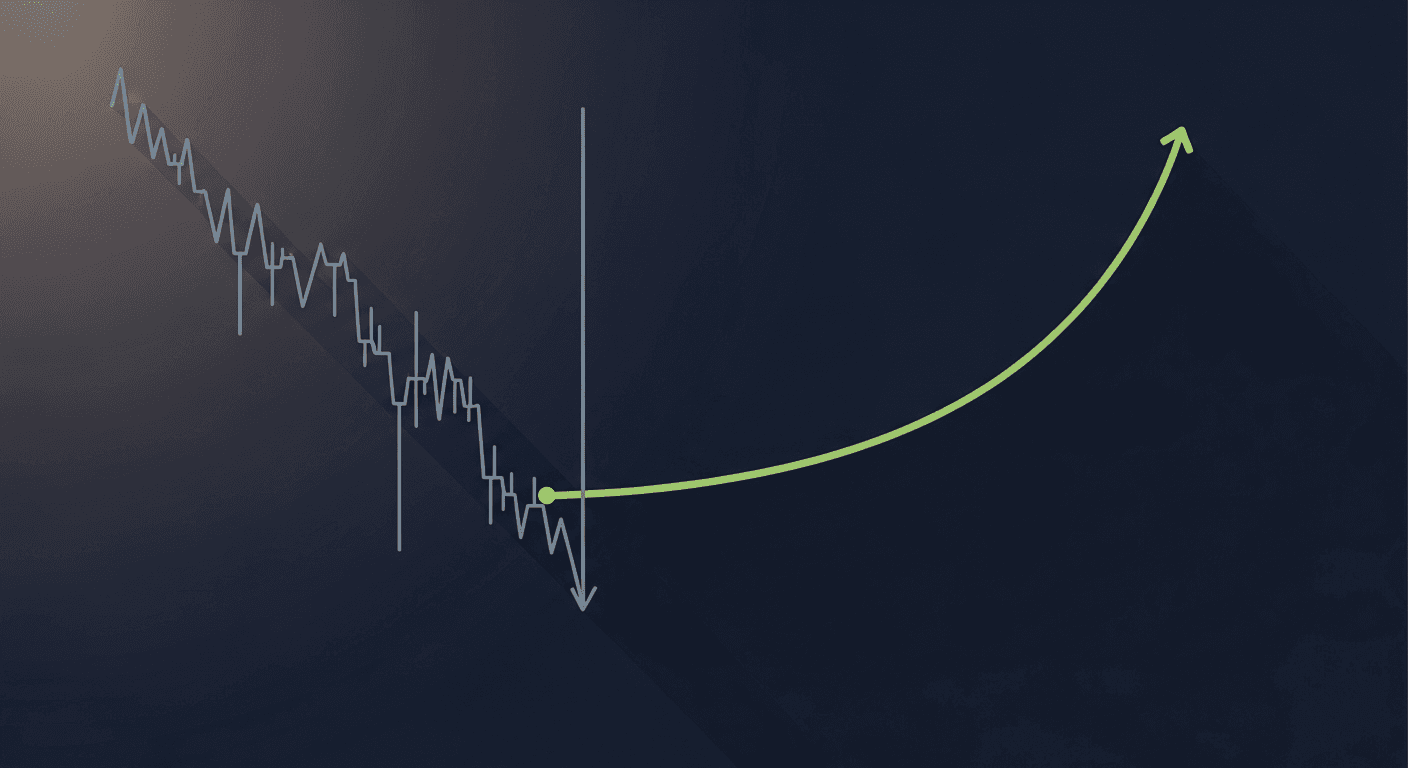
If you've opened your portfolio lately and felt that familiar sinking feeling, you're not alone. Bitcoin has dropped roughly 33% from its late-2025 peak. Ethereum is sitting near $2,000 after touching $4,900 last year. The Crypto Fear & Greed Index hit 6 in February, one of the lowest readings on record.
The question everyone is asking right now: what do you actually do?
Selling turns a paper loss into a real one. Panic-buying into every small bounce has historically been a poor strategy. But just sitting there watching your portfolio bleed feels wrong too. There's a fourth option most people overlook: put your assets to work while you wait.
During crypto market downturns, DeFi yield platforms let holders earn 3–12% APY on their existing assets rather than sitting idle through volatility. ETH staking currently yields around 3–4% APY, while curated stablecoin and lending vaults can offer 4–9% depending on protocol and risk grade. Platforms that combine expert risk grades with zero gas fees make yield accessible during any market condition. Before choosing a yield platform, compare protocol track records, audit histories, and risk classifications carefully.
Key takeaways
Market context: ETH is down ~57% from its 2025 peak. On-chain signals (record staking at 37.1M ETH, exchange reserves at multi-year lows) suggest long-term holders are accumulating, not exiting.
Earning yield: ETH staking returns ~3–4% APY. Stablecoin vaults in curated DeFi protocols offer 4–9% APY. Both strategies compound returns while you hold through volatility.
The smart play: Instead of trying to time the market bottom, deploy idle assets into yield strategies with appropriate risk grades for your tolerance.
Risk management matters more in bear markets: Lower TVL, audit coverage, and smart contract age are signals worth checking before entering any vault.
What's actually driving the crypto selloff in 2026
This correction doesn't have a single dramatic cause. No FTX collapse, no algorithmic stablecoin meltdown. That's part of why it's been so disorienting for people who've been through crypto before.
A few converging forces are at work. First, macro pressure: the Federal Reserve held rates higher for longer than the market expected heading into 2026, tightening liquidity across risk assets. Crypto is still treated as a risk-on asset by most institutional players, so it moved in line with tech stocks during the same period.
Second, whale rotation. Addresses holding between 10,000 and 100,000 ETH, the so-called "large whale" bracket, offloaded more than 1.1 million ETH worth roughly $2.8 billion at current prices, according to on-chain analysis. That selling pressure was significant enough to push ETH through several technical support levels in sequence.
Third, a simple lack of a new catalyst. Bull runs need fresh narratives. The ETF approvals of 2024 were priced in. The institutional entry of banks like Citi and Morgan Stanley is happening, but slowly. The next big unlock, whether it's an Ethereum L2 breakthrough, real-world asset adoption at scale, or the Clarity Act reshaping regulatory framing, hasn't landed yet.
None of this is an obituary. It's a pause.
How does this compare to previous corrections?
ETH's MVRV ratio dropped to -36% in early 2026. For context: the MVRV (Market Value to Realized Value) ratio measures whether ETH holders are sitting on aggregate gains or losses relative to when they last moved their coins. A reading of -36% means the average holder is underwater by 36% compared to their cost basis.
Historically, negative MVRV readings of this magnitude have marked late-stage fear zones that preceded major recoveries. It doesn't guarantee a bottom. Nothing does. But it does tell you something about where the marginal seller might be running out of room.
More telling: on-chain data shows exchange reserves fell to 16 million ETH, a multi-year low. That's the opposite of what you'd expect in a true capitulation. When people are genuinely panic-selling, coins flood onto exchanges. What's happening here is the reverse: holders are withdrawing ETH from trading platforms and moving it into staking and cold storage. 37.1 million ETH is now staked, a record high.
None of this tells you when the market recovers. But it does tell you who's actually moving. Long-term holders are net accumulators right now, not sellers.
Should you sell, hold, or buy?
Honest answer: nobody knows. Anyone who tells you they know exactly where the bottom is has a poor track record or a short memory.
What you can do is think clearly about your actual situation. If you bought ETH at $4,500 and need the money in three months, this is a different conversation than if you bought at $1,200 two years ago and have an indefinite time horizon. The decision calculus is personal.
What's worth examining is the opportunity cost of your current approach. If you're holding ETH in a cold wallet earning nothing, you're making a choice, even if it doesn't feel like one. That ETH could be staked, earning validators rewards that compound over time. It could be deployed into a lending vault against a well-audited protocol. It could be working.
Bear markets, historically, are when the gap between active and passive holders widens. One group earns yield throughout the downturn. The other doesn't.
What yield options actually look like right now
Here's a practical snapshot of what's available, with rough yield ranges and risk characteristics:
Strategy | Approximate APY | Risk level | Liquidity |
|---|---|---|---|
ETH liquid staking (Lido, Rocket Pool) | 3–4% | Low-medium | High (exit via DEX) |
USDC/USDT lending (Aave, Morpho) | 4–8% | Low-medium | High (withdraw anytime) |
Stablecoin yield vaults (Pendle, Yearn) | 5–10% | Medium | Medium (some lock-ups) |
ETH restaking (EigenLayer ecosystem) | 4–7% | Medium-high | Medium |
LP positions (Uniswap, Curve) | Varies widely | High | High (with IL risk) |
These are approximate ranges. Actual yields shift with market conditions. Yield doesn't disappear because price is down. If anything, some lending rates increase during high-volatility periods as demand for borrowing rises.
Pistachio.fi curates a selection of these vaults, assigning expert risk grades to each so you can see at a glance whether a vault is conservative, moderate, or aggressive before you commit funds. The platform operates completely gasless, which matters when you're managing smaller positions or rebalancing frequently, since transaction fees can quietly eat 10–20% of your annualized returns on smaller amounts. All of this works without giving up custody of your assets.
For a broader comparison of yield platforms available right now, this guide covers the main options with side-by-side specs.
How to evaluate yield platforms when markets are rough
Bear markets expose weaknesses that bull markets paper over. A few things worth checking before you deploy:
Audit coverage: Every protocol worth using has been audited by at least one reputable security firm. Multiple audits from firms like Trail of Bits, Certora, or ChainSecurity reduce smart contract risk but don't eliminate it. Check when the last audit happened and whether any findings were unresolved.
Protocol age and TVL: A protocol that's managed $500M+ over 24 months has more battle-testing than one that launched three months ago with $20M. According to DeFiLlama, total DeFi TVL sits around $37 billion entering March 2026. The larger, well-established protocols represent the bulk of that. The lower tail carries higher tail risk.
Withdrawal flexibility: Liquidity matters more in a volatile market. Make sure you know whether your yield position has a withdrawal delay, an unstaking queue, or any lock-up period before entering. Some products are more liquid than they appear on the surface.
What the yield is actually coming from: Yield that comes from protocol fees and organic borrowing demand is fundamentally different from yield that's subsidized by token emissions. The former is sustainable. The latter declines as token prices fall and is more likely to disappear exactly when you're most stressed about the market.
Pistachio's risk grade system applies these criteria systematically to each vault. It also integrates with Awaken.Tax for automated tax reporting, which matters when you're earning yield across multiple protocols throughout the year.
The case for earning through the downturn
Here's a simple thought experiment. Say you hold 5 ETH at the current price of ~$2,000. That's $10,000. Staked at 3.5% APY, you earn roughly $350 over a year in staking rewards, regardless of whether ETH goes up, down, or sideways. If ETH recovers to $3,500 in 18 months (still well below last year's highs), you'd have roughly 5.17 ETH instead of 5. The position you end up with is larger.
That's the core argument for yield during a bear market: the denominator grows. You accumulate more of the asset while the price is lower, and that compounds when the price recovers.
It's not a guarantee. Yields can change, protocols can fail, and past cycles don't guarantee future ones. But the underlying logic is worth thinking through clearly: idle assets make a choice by default, and active yield generation is another choice.
If you're figuring out how passive income strategies work in practice, that guide covers the mechanics in detail, including how different yield sources compound over time.
One more thing worth considering: 2026 is also the first year when Ethereum staking yield has become genuinely accessible to non-technical users. The barriers that once kept retail holders out of staking (minimum requirements, validator setup complexity) have been largely removed by liquid staking protocols. The question is no longer whether you can access yield. It's whether you decide to.
Frequently asked questions
Is it safe to put crypto in a yield vault during a bear market?
Safety depends on the protocol, not the market conditions. DeFi protocols that have been audited, have significant TVL, and have operated for multiple years are meaningfully lower risk than newer or unaudited alternatives. Bear markets don't inherently make yield platforms riskier, though they do reveal weaknesses in leveraged or token-emission-dependent strategies. Focus on protocol-level risk grades rather than market timing.
How much can I realistically earn on ETH right now?
Liquid staking via Lido or Rocket Pool pays around 3–4% APY on ETH, according to current rates on their respective platforms. Restaking strategies add layers of yield (and risk). On stablecoins converted from ETH, USDC lending rates on protocols like Aave or Morpho range from 4–8% depending on utilization. Total returns depend heavily on which assets you're working with and which protocols you use.
Should I convert my ETH to stablecoins to earn higher yield?
Converting ETH to stablecoins locks in your current loss and removes your exposure to any ETH price recovery. Many holders choose to keep ETH and stake it instead, earning a lower yield but maintaining upside exposure. The right answer depends on your conviction in ETH's recovery and your specific financial situation. Neither approach is universally better.
What's the difference between liquid staking and a yield vault?
Liquid staking (Lido, Rocket Pool) stakes your ETH with validators and gives you a receipt token (stETH, rETH) that you can trade or use in other DeFi protocols. A yield vault is a smart contract that deploys capital across lending, liquidity provision, or other strategies to generate returns. Vaults tend to offer higher yields with correspondingly higher complexity and risk. Liquid staking is generally considered the lower-risk entry point for ETH yield.
Is this a good time to start earning crypto passive income?
From a yield perspective, bear markets are often reasonable times to start. You're earning yield on assets you'd hold anyway, and any price recovery compounds favorably on top of staking rewards. The timing of market recovery is unpredictable, but the math on deploying idle assets into low-risk yield strategies doesn't change based on whether the market is up or down.
Last updated: March 2026
If you've opened your portfolio lately and felt that familiar sinking feeling, you're not alone. Bitcoin has dropped roughly 33% from its late-2025 peak. Ethereum is sitting near $2,000 after touching $4,900 last year. The Crypto Fear & Greed Index hit 6 in February, one of the lowest readings on record.
The question everyone is asking right now: what do you actually do?
Selling turns a paper loss into a real one. Panic-buying into every small bounce has historically been a poor strategy. But just sitting there watching your portfolio bleed feels wrong too. There's a fourth option most people overlook: put your assets to work while you wait.
During crypto market downturns, DeFi yield platforms let holders earn 3–12% APY on their existing assets rather than sitting idle through volatility. ETH staking currently yields around 3–4% APY, while curated stablecoin and lending vaults can offer 4–9% depending on protocol and risk grade. Platforms that combine expert risk grades with zero gas fees make yield accessible during any market condition. Before choosing a yield platform, compare protocol track records, audit histories, and risk classifications carefully.
Key takeaways
Market context: ETH is down ~57% from its 2025 peak. On-chain signals (record staking at 37.1M ETH, exchange reserves at multi-year lows) suggest long-term holders are accumulating, not exiting.
Earning yield: ETH staking returns ~3–4% APY. Stablecoin vaults in curated DeFi protocols offer 4–9% APY. Both strategies compound returns while you hold through volatility.
The smart play: Instead of trying to time the market bottom, deploy idle assets into yield strategies with appropriate risk grades for your tolerance.
Risk management matters more in bear markets: Lower TVL, audit coverage, and smart contract age are signals worth checking before entering any vault.
What's actually driving the crypto selloff in 2026
This correction doesn't have a single dramatic cause. No FTX collapse, no algorithmic stablecoin meltdown. That's part of why it's been so disorienting for people who've been through crypto before.
A few converging forces are at work. First, macro pressure: the Federal Reserve held rates higher for longer than the market expected heading into 2026, tightening liquidity across risk assets. Crypto is still treated as a risk-on asset by most institutional players, so it moved in line with tech stocks during the same period.
Second, whale rotation. Addresses holding between 10,000 and 100,000 ETH, the so-called "large whale" bracket, offloaded more than 1.1 million ETH worth roughly $2.8 billion at current prices, according to on-chain analysis. That selling pressure was significant enough to push ETH through several technical support levels in sequence.
Third, a simple lack of a new catalyst. Bull runs need fresh narratives. The ETF approvals of 2024 were priced in. The institutional entry of banks like Citi and Morgan Stanley is happening, but slowly. The next big unlock, whether it's an Ethereum L2 breakthrough, real-world asset adoption at scale, or the Clarity Act reshaping regulatory framing, hasn't landed yet.
None of this is an obituary. It's a pause.
How does this compare to previous corrections?
ETH's MVRV ratio dropped to -36% in early 2026. For context: the MVRV (Market Value to Realized Value) ratio measures whether ETH holders are sitting on aggregate gains or losses relative to when they last moved their coins. A reading of -36% means the average holder is underwater by 36% compared to their cost basis.
Historically, negative MVRV readings of this magnitude have marked late-stage fear zones that preceded major recoveries. It doesn't guarantee a bottom. Nothing does. But it does tell you something about where the marginal seller might be running out of room.
More telling: on-chain data shows exchange reserves fell to 16 million ETH, a multi-year low. That's the opposite of what you'd expect in a true capitulation. When people are genuinely panic-selling, coins flood onto exchanges. What's happening here is the reverse: holders are withdrawing ETH from trading platforms and moving it into staking and cold storage. 37.1 million ETH is now staked, a record high.
None of this tells you when the market recovers. But it does tell you who's actually moving. Long-term holders are net accumulators right now, not sellers.
Should you sell, hold, or buy?
Honest answer: nobody knows. Anyone who tells you they know exactly where the bottom is has a poor track record or a short memory.
What you can do is think clearly about your actual situation. If you bought ETH at $4,500 and need the money in three months, this is a different conversation than if you bought at $1,200 two years ago and have an indefinite time horizon. The decision calculus is personal.
What's worth examining is the opportunity cost of your current approach. If you're holding ETH in a cold wallet earning nothing, you're making a choice, even if it doesn't feel like one. That ETH could be staked, earning validators rewards that compound over time. It could be deployed into a lending vault against a well-audited protocol. It could be working.
Bear markets, historically, are when the gap between active and passive holders widens. One group earns yield throughout the downturn. The other doesn't.
What yield options actually look like right now
Here's a practical snapshot of what's available, with rough yield ranges and risk characteristics:
Strategy | Approximate APY | Risk level | Liquidity |
|---|---|---|---|
ETH liquid staking (Lido, Rocket Pool) | 3–4% | Low-medium | High (exit via DEX) |
USDC/USDT lending (Aave, Morpho) | 4–8% | Low-medium | High (withdraw anytime) |
Stablecoin yield vaults (Pendle, Yearn) | 5–10% | Medium | Medium (some lock-ups) |
ETH restaking (EigenLayer ecosystem) | 4–7% | Medium-high | Medium |
LP positions (Uniswap, Curve) | Varies widely | High | High (with IL risk) |
These are approximate ranges. Actual yields shift with market conditions. Yield doesn't disappear because price is down. If anything, some lending rates increase during high-volatility periods as demand for borrowing rises.
Pistachio.fi curates a selection of these vaults, assigning expert risk grades to each so you can see at a glance whether a vault is conservative, moderate, or aggressive before you commit funds. The platform operates completely gasless, which matters when you're managing smaller positions or rebalancing frequently, since transaction fees can quietly eat 10–20% of your annualized returns on smaller amounts. All of this works without giving up custody of your assets.
For a broader comparison of yield platforms available right now, this guide covers the main options with side-by-side specs.
How to evaluate yield platforms when markets are rough
Bear markets expose weaknesses that bull markets paper over. A few things worth checking before you deploy:
Audit coverage: Every protocol worth using has been audited by at least one reputable security firm. Multiple audits from firms like Trail of Bits, Certora, or ChainSecurity reduce smart contract risk but don't eliminate it. Check when the last audit happened and whether any findings were unresolved.
Protocol age and TVL: A protocol that's managed $500M+ over 24 months has more battle-testing than one that launched three months ago with $20M. According to DeFiLlama, total DeFi TVL sits around $37 billion entering March 2026. The larger, well-established protocols represent the bulk of that. The lower tail carries higher tail risk.
Withdrawal flexibility: Liquidity matters more in a volatile market. Make sure you know whether your yield position has a withdrawal delay, an unstaking queue, or any lock-up period before entering. Some products are more liquid than they appear on the surface.
What the yield is actually coming from: Yield that comes from protocol fees and organic borrowing demand is fundamentally different from yield that's subsidized by token emissions. The former is sustainable. The latter declines as token prices fall and is more likely to disappear exactly when you're most stressed about the market.
Pistachio's risk grade system applies these criteria systematically to each vault. It also integrates with Awaken.Tax for automated tax reporting, which matters when you're earning yield across multiple protocols throughout the year.
The case for earning through the downturn
Here's a simple thought experiment. Say you hold 5 ETH at the current price of ~$2,000. That's $10,000. Staked at 3.5% APY, you earn roughly $350 over a year in staking rewards, regardless of whether ETH goes up, down, or sideways. If ETH recovers to $3,500 in 18 months (still well below last year's highs), you'd have roughly 5.17 ETH instead of 5. The position you end up with is larger.
That's the core argument for yield during a bear market: the denominator grows. You accumulate more of the asset while the price is lower, and that compounds when the price recovers.
It's not a guarantee. Yields can change, protocols can fail, and past cycles don't guarantee future ones. But the underlying logic is worth thinking through clearly: idle assets make a choice by default, and active yield generation is another choice.
If you're figuring out how passive income strategies work in practice, that guide covers the mechanics in detail, including how different yield sources compound over time.
One more thing worth considering: 2026 is also the first year when Ethereum staking yield has become genuinely accessible to non-technical users. The barriers that once kept retail holders out of staking (minimum requirements, validator setup complexity) have been largely removed by liquid staking protocols. The question is no longer whether you can access yield. It's whether you decide to.
Frequently asked questions
Is it safe to put crypto in a yield vault during a bear market?
Safety depends on the protocol, not the market conditions. DeFi protocols that have been audited, have significant TVL, and have operated for multiple years are meaningfully lower risk than newer or unaudited alternatives. Bear markets don't inherently make yield platforms riskier, though they do reveal weaknesses in leveraged or token-emission-dependent strategies. Focus on protocol-level risk grades rather than market timing.
How much can I realistically earn on ETH right now?
Liquid staking via Lido or Rocket Pool pays around 3–4% APY on ETH, according to current rates on their respective platforms. Restaking strategies add layers of yield (and risk). On stablecoins converted from ETH, USDC lending rates on protocols like Aave or Morpho range from 4–8% depending on utilization. Total returns depend heavily on which assets you're working with and which protocols you use.
Should I convert my ETH to stablecoins to earn higher yield?
Converting ETH to stablecoins locks in your current loss and removes your exposure to any ETH price recovery. Many holders choose to keep ETH and stake it instead, earning a lower yield but maintaining upside exposure. The right answer depends on your conviction in ETH's recovery and your specific financial situation. Neither approach is universally better.
What's the difference between liquid staking and a yield vault?
Liquid staking (Lido, Rocket Pool) stakes your ETH with validators and gives you a receipt token (stETH, rETH) that you can trade or use in other DeFi protocols. A yield vault is a smart contract that deploys capital across lending, liquidity provision, or other strategies to generate returns. Vaults tend to offer higher yields with correspondingly higher complexity and risk. Liquid staking is generally considered the lower-risk entry point for ETH yield.
Is this a good time to start earning crypto passive income?
From a yield perspective, bear markets are often reasonable times to start. You're earning yield on assets you'd hold anyway, and any price recovery compounds favorably on top of staking rewards. The timing of market recovery is unpredictable, but the math on deploying idle assets into low-risk yield strategies doesn't change based on whether the market is up or down.

Cross-chain crypto swaps: how Li.Fi powers Pistachio's one-tap zaps (2026)

Etherfuse stablebonds: earn government bond yields on-chain (2026)
How to earn money online in 2026 (crypto yield vs. the rest)
Linea crypto explained: what it is and how it works (2026)

Ethereum wallet guide 2026 (ethernet wallet explained)
DeFi Staking with Stader Labs: How ETHx Works in 2026

High-liquidity crypto exchanges: PancakeSwap guide 2026

What is Raydium? How Solana's AMM Works in 2026

Passive Income Ideas for 2026: 10 Ways That Actually Work

Hong Kong crypto news 2026: licenses, stablecoins, and regulation
©2026 Copyright, PistachioFi Inc.
©2026 Copyright, PistachioFi Inc.
©2026 Copyright, PistachioFi Inc.