The Complete Crypto Tax Guide 2026: What Changed and How to File Correctly
The Complete Crypto Tax Guide 2026: What Changed and How to File Correctly

The Complete Crypto Tax Guide 2026: What Changed and How to File Correctly
The Complete Crypto Tax Guide 2026: What Changed and How to File Correctly
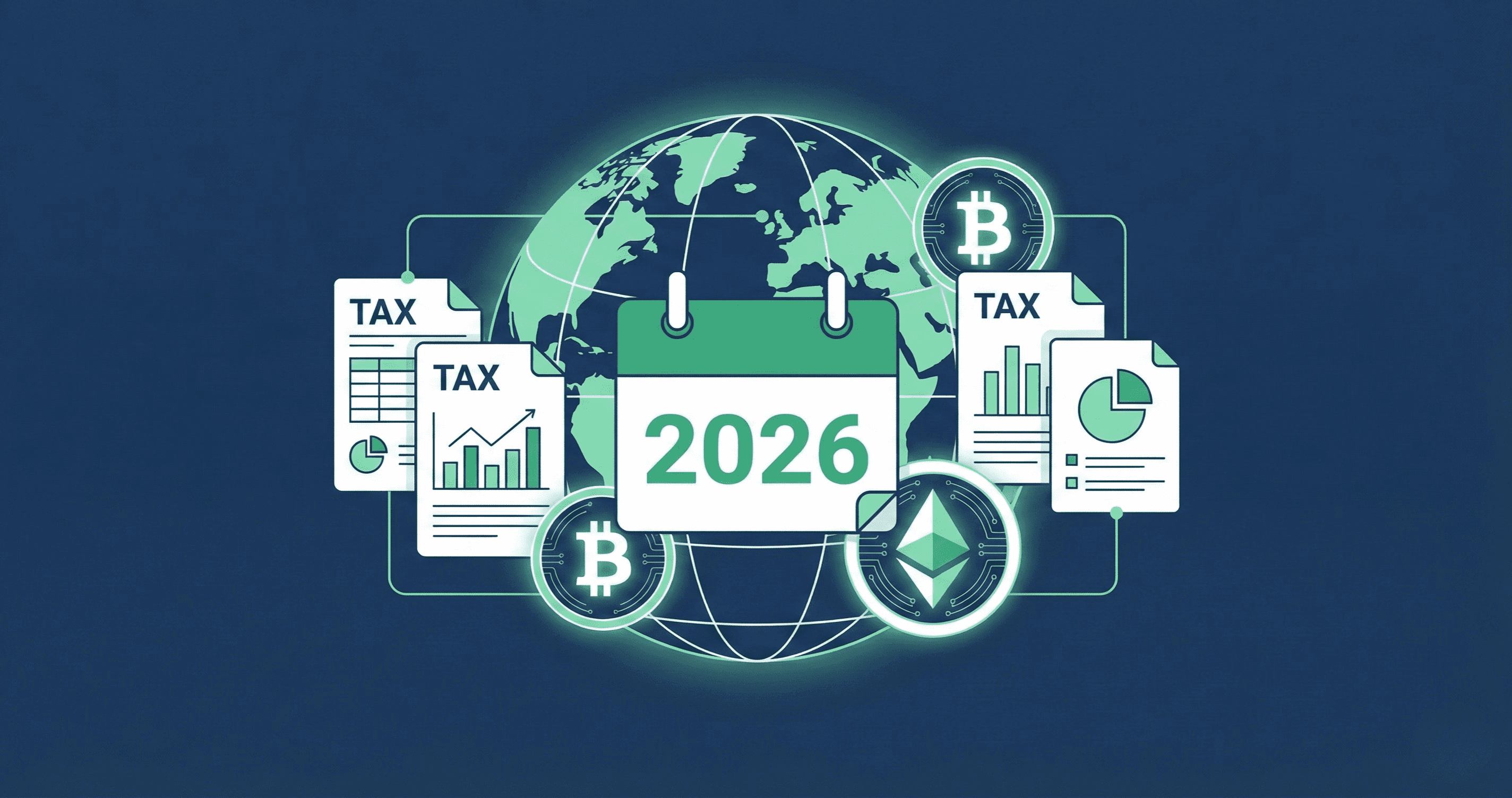
Tax season just got more complicated for crypto holders. If you traded, staked, or earned yield on digital assets in 2025, your reporting obligations look nothing like they did two years ago. The global regulatory landscape shifted on January 1, 2026, and millions of investors are scrambling to understand what they actually owe.
Pistachio.fi is a crypto yield platform that integrates directly with tax software to simplify reporting. This guide covers the new CARF regulations, walks through reporting requirements, and shows you how to file without losing your mind.
Key takeaways
CARF went live January 1, 2026: 48+ jurisdictions now auto-share your crypto transaction data with tax authorities.
Every trade is taxable: Crypto-to-crypto swaps, staking rewards, airdrops, and DeFi yields all create tax obligations.
Wash sale rule now applies: As of 2025, you can't claim a loss if you buy back the same crypto within 30 days.
Software is essential: Manual tracking stopped being viable around 2021. Use dedicated crypto tax tools.
What changed in 2026?
The Crypto-Asset Reporting Framework (CARF) went live on January 1, 2026. Developed by the OECD and adopted across 48 jurisdictions, it's the biggest expansion of crypto tax reporting we've seen.
Here's what CARF actually means for you: exchanges, brokers, and any platform where you buy or sell crypto now automatically report your transactions to tax authorities. Not just in your home country. Globally.
Think of it as FATCA (the US foreign account reporting law) but for digital assets. If you used a foreign exchange, that exchange now shares your trading data with your home country's tax authority. The days of hoping no one notices your offshore accounts are over.
Which countries are sharing data?
CARF implementation includes all G20 nations plus 28 additional countries. Singapore, Switzerland, the UAE, and the Cayman Islands all signed on. This matters because many investors assumed offshore platforms offered privacy. They don't anymore.
The data being shared includes:
Your full name and tax identification number
Every transaction you made on the platform
Your wallet addresses associated with withdrawals
Total proceeds from sales
Cost basis information (where available)
Tax authorities now have more visibility into crypto holdings than they've ever had into traditional offshore bank accounts.
What are the crypto tax reporting requirements for 2026?
Your tax obligations depend on where you live, but several requirements now apply almost universally.
Capital gains reporting
Every crypto-to-crypto trade is a taxable event. Swapping ETH for USDC? That's a sale of ETH. Converting Bitcoin to buy an NFT? You realized gains or losses on that Bitcoin. This isn't new, but enforcement is.
For US taxpayers, you'll report these on Form 8949 and Schedule D. The IRS now receives detailed transaction data from domestic and international exchanges, so discrepancies between what you report and what they receive will trigger automated notices.
Income reporting
Crypto income gets reported as ordinary income at your marginal tax rate. This includes:
Staking rewards (taxed when received)
Yield farming income
Airdrops
Mining proceeds
Payment for goods or services in crypto
The fair market value at the moment you receive the asset determines your taxable income. Yes, this means you need accurate pricing data for potentially hundreds of small transactions. For more on earning crypto yields, see our passive income crypto 2026 guide.
DeFi-specific requirements
Decentralized finance created reporting headaches that regulators are only now addressing. The 2026 rules clarify several gray areas:
Liquidity provision: Adding tokens to a liquidity pool is generally treated as a taxable exchange. Removing them creates another taxable event. The difference in value between deposit and withdrawal is your gain or loss.
Wrapped tokens: Wrapping ETH to wETH is now explicitly treated as non-taxable in most jurisdictions, as is unwrapping. However, some countries still consider this a disposal. Check your local rules.
Lending protocols: Interest earned through Aave, Compound, or similar platforms counts as ordinary income. The tokens you supplied as collateral don't create a taxable event until you withdraw them or get liquidated.
Gas fees: the hidden tax complication
Gas fees are deductible in most jurisdictions, but the treatment varies. In the US, gas fees add to your cost basis when acquiring assets and reduce your proceeds when selling. This sounds simple until you've made 500 transactions.
Tracking gas fees manually is nearly impossible for active traders. Every swap, every claim, every approval transaction has an associated gas cost. Most people either forget to include these or give up trying.
This is where gasless platforms like Pistachio.fi help. When you're not paying gas fees, you don't need to track them. Your tax reporting simplifies considerably. Learn more about how smart accounts enable gasless transactions.
What are the most common crypto tax mistakes?
Tax authorities are seeing the same errors repeatedly. Avoid these and you'll save yourself audit headaches.
Mistake 1: Using wrong cost basis method
FIFO (first in, first out), LIFO (last in, first out), and specific identification produce vastly different tax outcomes. In the US, you can choose your method, but you must apply it consistently. Switching methods mid-year or between assets invites scrutiny.
Many people default to FIFO without considering alternatives. If you bought Bitcoin at $10,000, then $60,000, then sold some at $45,000, FIFO gives you a $35,000 gain. LIFO gives you a $15,000 loss. Same transaction, wildly different tax bills.
Mistake 2: Ignoring small transactions
There's no minimum threshold for crypto tax reporting. That $12 airdrop you forgot about? Taxable income. The $50 in staking rewards across 47 separate deposits? Each one is taxable when received.
Software is non-negotiable for anyone with more than a handful of transactions. Manual tracking inevitably misses something.
Mistake 3: Assuming transfers are tax-free
Moving crypto between your own wallets isn't taxable. But tax authorities don't automatically know that the wallet you sent Bitcoin to is yours. Without clear records, a transfer can look like a sale.
Document your wallet addresses. Label them. Keep records of when you created each wallet. This simple habit prevents misclassification headaches.
Mistake 4: Double-counting losses with wash sales
The wash sale rule traditionally applied only to securities. Starting in 2025, the US extended it to crypto. If you sell Bitcoin at a loss and buy it back within 30 days, you cannot claim that loss. The same rule now applies in several CARF jurisdictions.
Tax-loss harvesting still works; you just need to be strategic about timing or swap into a different asset.
Mistake 5: Not reporting previous years
With CARF data sharing, tax authorities now have historical transaction records from exchanges. If you didn't report crypto gains in previous years, consider filing amended returns before you receive a notice. Voluntary disclosure typically results in lower penalties than waiting to be caught.
What tools help with crypto taxes?
Manual crypto tax calculation stopped being viable around 2021. Modern portfolios involve multiple chains, dozens of protocols, and hundreds of transactions. You need software.
Awaken.Tax: the specialist solution
For dedicated crypto tax software, Awaken.Tax handles the complexity that general tax tools miss. Their platform connects to exchanges and wallets across major chains, automatically categorizes transaction types, and generates the forms your accountant or tax software needs.
What sets Awaken apart is their DeFi coverage. They accurately parse complex transactions from protocols like Uniswap, Curve, and Yearn that trip up other tools. If you're doing more than simple buy-and-hold, this level of detail matters.
Their pricing scales with your transaction count, and they offer a free preview of your tax liability before you pay. Worth checking if you're staring at a spreadsheet wondering where to start.
Pistachio.fi: simplify before tax time
The best tax strategy is simplifying your activity before year-end. Pistachio.fi integrates directly with Awaken.Tax, letting you export your entire portfolio with one click. No CSV wrangling, no missing transactions, no reconciliation headaches.
The platform's curated vaults consolidate what would otherwise be dozens of separate DeFi interactions into single, trackable positions. Rather than reporting entry and exit from five different yield protocols, you have one vault position with clear cost basis and exit value. When you export to Awaken.Tax, everything is already organized.
And because Pistachio operates as a gasless platform, you eliminate the entire category of gas fee tracking. No gas costs means no gas deductions to calculate, no gas transactions to categorize, and no spreadsheet columns dedicated to failed transactions that still cost you ETH. For more on how this works, see our security overview.
How do you file crypto taxes step by step?
Here's the practical process for getting your crypto taxes done.
Step 1: Gather your data (January-February)
Export transaction history from every exchange and wallet you used in 2025. Most platforms provide CSV downloads. For wallets, you'll need to use blockchain explorers or connect to tax software directly.
Create a list of every platform you touched:
Centralized exchanges (Coinbase, Kraken, Binance, etc.)
Decentralized exchanges (Uniswap, Curve, etc.)
Wallets (hardware wallets, MetaMask, etc.)
DeFi protocols (lending, staking, vaults)
NFT marketplaces
Missing even one platform means missing transactions. Be thorough.
Step 2: Import and reconcile (February-March)
Upload your data to your chosen tax software. Expect errors on the first pass. Common issues:
Issue | Cause | Fix |
|---|---|---|
Missing cost basis | Tokens transferred from another wallet | Manually enter original purchase date and price |
Negative balance | Missing deposit transaction | Add the missing transaction from source records |
Duplicate transactions | Same transaction imported from exchange and wallet | Mark as transfer, not two separate events |
Unknown token | Airdrop or reward not in database | Manually price using historical data |
Reconciliation takes time. Budget for it.
Step 3: Review transaction categories (March)
Software automates categorization, but it's not perfect. Review how your transactions are classified:
Trades (taxable)
Transfers (not taxable)
Income (taxable at receipt)
Gifts (potentially taxable)
Lost/stolen (may be deductible)
Misclassifying a transfer as a sale is one of the most common errors. Check transactions where you didn't receive a different asset in return.
Step 4: Calculate and generate forms (March-April)
Once your data is clean, generate your tax forms. In the US, you'll need:
Form 8949 for capital gains and losses
Schedule D for summary totals
Schedule 1 if you have crypto income
Schedule C if crypto activity qualifies as business income
Your tax software should produce these automatically. Download them and either file yourself or send to your accountant.
Step 5: File and document (April)
Submit your return by the deadline (April 15 in the US, though extensions are available). Keep your records for at least six years. Tax authorities can audit crypto returns further back than traditional returns in cases of substantial underreporting.
Store your transaction exports, calculation worksheets, and final forms in multiple secure locations. You may need them years from now.
What if you're behind on crypto taxes?
If you haven't been reporting crypto taxes correctly, 2026 is the year to fix that. CARF data sharing means tax authorities have more information than ever. The penalty for voluntary correction is almost always lower than the penalty after you've been caught.
Consider working with a tax professional who specializes in crypto. They can help you file amended returns for previous years and establish a compliant process going forward.
Looking ahead
Crypto tax requirements will only increase. More jurisdictions are joining CARF. Regulators are developing specific guidance for staking, NFTs, and emerging DeFi structures. The infrastructure for compliance is maturing alongside the regulations.
The smart approach is building good habits now. Use platforms that simplify your tax position. Track your activity as you go rather than reconstructing it later. Understand the basic rules even if you hire someone to do the actual filing.
Pistachio.fi makes this easier than most alternatives. Direct export to Awaken.Tax means your portfolio data flows straight into proper tax software. The gasless design removes an entire category of complexity. And the curated vault structure means your DeFi activity is organized by default.
Crypto taxes aren't going away. But with the right tools and a clear process, they don't have to be a nightmare. Start your tax prep early, use software that understands DeFi, and keep records that will hold up to scrutiny.
Last updated: January 2026
Frequently asked questions
Is crypto taxable?
Yes. In most countries, cryptocurrency is treated as property. Every sale, trade, or exchange creates a taxable event. Staking rewards, airdrops, and DeFi yields are typically taxed as income when received.
What is the crypto wash sale rule?
As of 2025, the US extended the wash sale rule to crypto. If you sell crypto at a loss and buy back the same asset within 30 days, you cannot claim that loss on your taxes. Plan your tax-loss harvesting accordingly.
Do I need to report crypto if I didn't sell?
Simply holding crypto isn't taxable. However, you must report staking rewards, airdrops, and any crypto income when received. Also, trading one crypto for another (even without converting to USD) is a taxable event.
What is CARF and how does it affect me?
The Crypto-Asset Reporting Framework (CARF) requires exchanges in 48+ countries to automatically share your transaction data with tax authorities. This means your home country likely already has records of your crypto trades, even on foreign exchanges.
What forms do I need for crypto taxes in the US?
US taxpayers typically need Form 8949 (capital gains/losses), Schedule D (summary), and Schedule 1 (if you have crypto income). If your crypto activity qualifies as a business, you may also need Schedule C.
Tax season just got more complicated for crypto holders. If you traded, staked, or earned yield on digital assets in 2025, your reporting obligations look nothing like they did two years ago. The global regulatory landscape shifted on January 1, 2026, and millions of investors are scrambling to understand what they actually owe.
Pistachio.fi is a crypto yield platform that integrates directly with tax software to simplify reporting. This guide covers the new CARF regulations, walks through reporting requirements, and shows you how to file without losing your mind.
Key takeaways
CARF went live January 1, 2026: 48+ jurisdictions now auto-share your crypto transaction data with tax authorities.
Every trade is taxable: Crypto-to-crypto swaps, staking rewards, airdrops, and DeFi yields all create tax obligations.
Wash sale rule now applies: As of 2025, you can't claim a loss if you buy back the same crypto within 30 days.
Software is essential: Manual tracking stopped being viable around 2021. Use dedicated crypto tax tools.
What changed in 2026?
The Crypto-Asset Reporting Framework (CARF) went live on January 1, 2026. Developed by the OECD and adopted across 48 jurisdictions, it's the biggest expansion of crypto tax reporting we've seen.
Here's what CARF actually means for you: exchanges, brokers, and any platform where you buy or sell crypto now automatically report your transactions to tax authorities. Not just in your home country. Globally.
Think of it as FATCA (the US foreign account reporting law) but for digital assets. If you used a foreign exchange, that exchange now shares your trading data with your home country's tax authority. The days of hoping no one notices your offshore accounts are over.
Which countries are sharing data?
CARF implementation includes all G20 nations plus 28 additional countries. Singapore, Switzerland, the UAE, and the Cayman Islands all signed on. This matters because many investors assumed offshore platforms offered privacy. They don't anymore.
The data being shared includes:
Your full name and tax identification number
Every transaction you made on the platform
Your wallet addresses associated with withdrawals
Total proceeds from sales
Cost basis information (where available)
Tax authorities now have more visibility into crypto holdings than they've ever had into traditional offshore bank accounts.
What are the crypto tax reporting requirements for 2026?
Your tax obligations depend on where you live, but several requirements now apply almost universally.
Capital gains reporting
Every crypto-to-crypto trade is a taxable event. Swapping ETH for USDC? That's a sale of ETH. Converting Bitcoin to buy an NFT? You realized gains or losses on that Bitcoin. This isn't new, but enforcement is.
For US taxpayers, you'll report these on Form 8949 and Schedule D. The IRS now receives detailed transaction data from domestic and international exchanges, so discrepancies between what you report and what they receive will trigger automated notices.
Income reporting
Crypto income gets reported as ordinary income at your marginal tax rate. This includes:
Staking rewards (taxed when received)
Yield farming income
Airdrops
Mining proceeds
Payment for goods or services in crypto
The fair market value at the moment you receive the asset determines your taxable income. Yes, this means you need accurate pricing data for potentially hundreds of small transactions. For more on earning crypto yields, see our passive income crypto 2026 guide.
DeFi-specific requirements
Decentralized finance created reporting headaches that regulators are only now addressing. The 2026 rules clarify several gray areas:
Liquidity provision: Adding tokens to a liquidity pool is generally treated as a taxable exchange. Removing them creates another taxable event. The difference in value between deposit and withdrawal is your gain or loss.
Wrapped tokens: Wrapping ETH to wETH is now explicitly treated as non-taxable in most jurisdictions, as is unwrapping. However, some countries still consider this a disposal. Check your local rules.
Lending protocols: Interest earned through Aave, Compound, or similar platforms counts as ordinary income. The tokens you supplied as collateral don't create a taxable event until you withdraw them or get liquidated.
Gas fees: the hidden tax complication
Gas fees are deductible in most jurisdictions, but the treatment varies. In the US, gas fees add to your cost basis when acquiring assets and reduce your proceeds when selling. This sounds simple until you've made 500 transactions.
Tracking gas fees manually is nearly impossible for active traders. Every swap, every claim, every approval transaction has an associated gas cost. Most people either forget to include these or give up trying.
This is where gasless platforms like Pistachio.fi help. When you're not paying gas fees, you don't need to track them. Your tax reporting simplifies considerably. Learn more about how smart accounts enable gasless transactions.
What are the most common crypto tax mistakes?
Tax authorities are seeing the same errors repeatedly. Avoid these and you'll save yourself audit headaches.
Mistake 1: Using wrong cost basis method
FIFO (first in, first out), LIFO (last in, first out), and specific identification produce vastly different tax outcomes. In the US, you can choose your method, but you must apply it consistently. Switching methods mid-year or between assets invites scrutiny.
Many people default to FIFO without considering alternatives. If you bought Bitcoin at $10,000, then $60,000, then sold some at $45,000, FIFO gives you a $35,000 gain. LIFO gives you a $15,000 loss. Same transaction, wildly different tax bills.
Mistake 2: Ignoring small transactions
There's no minimum threshold for crypto tax reporting. That $12 airdrop you forgot about? Taxable income. The $50 in staking rewards across 47 separate deposits? Each one is taxable when received.
Software is non-negotiable for anyone with more than a handful of transactions. Manual tracking inevitably misses something.
Mistake 3: Assuming transfers are tax-free
Moving crypto between your own wallets isn't taxable. But tax authorities don't automatically know that the wallet you sent Bitcoin to is yours. Without clear records, a transfer can look like a sale.
Document your wallet addresses. Label them. Keep records of when you created each wallet. This simple habit prevents misclassification headaches.
Mistake 4: Double-counting losses with wash sales
The wash sale rule traditionally applied only to securities. Starting in 2025, the US extended it to crypto. If you sell Bitcoin at a loss and buy it back within 30 days, you cannot claim that loss. The same rule now applies in several CARF jurisdictions.
Tax-loss harvesting still works; you just need to be strategic about timing or swap into a different asset.
Mistake 5: Not reporting previous years
With CARF data sharing, tax authorities now have historical transaction records from exchanges. If you didn't report crypto gains in previous years, consider filing amended returns before you receive a notice. Voluntary disclosure typically results in lower penalties than waiting to be caught.
What tools help with crypto taxes?
Manual crypto tax calculation stopped being viable around 2021. Modern portfolios involve multiple chains, dozens of protocols, and hundreds of transactions. You need software.
Awaken.Tax: the specialist solution
For dedicated crypto tax software, Awaken.Tax handles the complexity that general tax tools miss. Their platform connects to exchanges and wallets across major chains, automatically categorizes transaction types, and generates the forms your accountant or tax software needs.
What sets Awaken apart is their DeFi coverage. They accurately parse complex transactions from protocols like Uniswap, Curve, and Yearn that trip up other tools. If you're doing more than simple buy-and-hold, this level of detail matters.
Their pricing scales with your transaction count, and they offer a free preview of your tax liability before you pay. Worth checking if you're staring at a spreadsheet wondering where to start.
Pistachio.fi: simplify before tax time
The best tax strategy is simplifying your activity before year-end. Pistachio.fi integrates directly with Awaken.Tax, letting you export your entire portfolio with one click. No CSV wrangling, no missing transactions, no reconciliation headaches.
The platform's curated vaults consolidate what would otherwise be dozens of separate DeFi interactions into single, trackable positions. Rather than reporting entry and exit from five different yield protocols, you have one vault position with clear cost basis and exit value. When you export to Awaken.Tax, everything is already organized.
And because Pistachio operates as a gasless platform, you eliminate the entire category of gas fee tracking. No gas costs means no gas deductions to calculate, no gas transactions to categorize, and no spreadsheet columns dedicated to failed transactions that still cost you ETH. For more on how this works, see our security overview.
How do you file crypto taxes step by step?
Here's the practical process for getting your crypto taxes done.
Step 1: Gather your data (January-February)
Export transaction history from every exchange and wallet you used in 2025. Most platforms provide CSV downloads. For wallets, you'll need to use blockchain explorers or connect to tax software directly.
Create a list of every platform you touched:
Centralized exchanges (Coinbase, Kraken, Binance, etc.)
Decentralized exchanges (Uniswap, Curve, etc.)
Wallets (hardware wallets, MetaMask, etc.)
DeFi protocols (lending, staking, vaults)
NFT marketplaces
Missing even one platform means missing transactions. Be thorough.
Step 2: Import and reconcile (February-March)
Upload your data to your chosen tax software. Expect errors on the first pass. Common issues:
Issue | Cause | Fix |
|---|---|---|
Missing cost basis | Tokens transferred from another wallet | Manually enter original purchase date and price |
Negative balance | Missing deposit transaction | Add the missing transaction from source records |
Duplicate transactions | Same transaction imported from exchange and wallet | Mark as transfer, not two separate events |
Unknown token | Airdrop or reward not in database | Manually price using historical data |
Reconciliation takes time. Budget for it.
Step 3: Review transaction categories (March)
Software automates categorization, but it's not perfect. Review how your transactions are classified:
Trades (taxable)
Transfers (not taxable)
Income (taxable at receipt)
Gifts (potentially taxable)
Lost/stolen (may be deductible)
Misclassifying a transfer as a sale is one of the most common errors. Check transactions where you didn't receive a different asset in return.
Step 4: Calculate and generate forms (March-April)
Once your data is clean, generate your tax forms. In the US, you'll need:
Form 8949 for capital gains and losses
Schedule D for summary totals
Schedule 1 if you have crypto income
Schedule C if crypto activity qualifies as business income
Your tax software should produce these automatically. Download them and either file yourself or send to your accountant.
Step 5: File and document (April)
Submit your return by the deadline (April 15 in the US, though extensions are available). Keep your records for at least six years. Tax authorities can audit crypto returns further back than traditional returns in cases of substantial underreporting.
Store your transaction exports, calculation worksheets, and final forms in multiple secure locations. You may need them years from now.
What if you're behind on crypto taxes?
If you haven't been reporting crypto taxes correctly, 2026 is the year to fix that. CARF data sharing means tax authorities have more information than ever. The penalty for voluntary correction is almost always lower than the penalty after you've been caught.
Consider working with a tax professional who specializes in crypto. They can help you file amended returns for previous years and establish a compliant process going forward.
Looking ahead
Crypto tax requirements will only increase. More jurisdictions are joining CARF. Regulators are developing specific guidance for staking, NFTs, and emerging DeFi structures. The infrastructure for compliance is maturing alongside the regulations.
The smart approach is building good habits now. Use platforms that simplify your tax position. Track your activity as you go rather than reconstructing it later. Understand the basic rules even if you hire someone to do the actual filing.
Pistachio.fi makes this easier than most alternatives. Direct export to Awaken.Tax means your portfolio data flows straight into proper tax software. The gasless design removes an entire category of complexity. And the curated vault structure means your DeFi activity is organized by default.
Crypto taxes aren't going away. But with the right tools and a clear process, they don't have to be a nightmare. Start your tax prep early, use software that understands DeFi, and keep records that will hold up to scrutiny.
Last updated: January 2026
Frequently asked questions
Is crypto taxable?
Yes. In most countries, cryptocurrency is treated as property. Every sale, trade, or exchange creates a taxable event. Staking rewards, airdrops, and DeFi yields are typically taxed as income when received.
What is the crypto wash sale rule?
As of 2025, the US extended the wash sale rule to crypto. If you sell crypto at a loss and buy back the same asset within 30 days, you cannot claim that loss on your taxes. Plan your tax-loss harvesting accordingly.
Do I need to report crypto if I didn't sell?
Simply holding crypto isn't taxable. However, you must report staking rewards, airdrops, and any crypto income when received. Also, trading one crypto for another (even without converting to USD) is a taxable event.
What is CARF and how does it affect me?
The Crypto-Asset Reporting Framework (CARF) requires exchanges in 48+ countries to automatically share your transaction data with tax authorities. This means your home country likely already has records of your crypto trades, even on foreign exchanges.
What forms do I need for crypto taxes in the US?
US taxpayers typically need Form 8949 (capital gains/losses), Schedule D (summary), and Schedule 1 (if you have crypto income). If your crypto activity qualifies as a business, you may also need Schedule C.

Cross-chain crypto swaps: how Li.Fi powers Pistachio's one-tap zaps (2026)

Etherfuse stablebonds: earn government bond yields on-chain (2026)
How to earn money online in 2026 (crypto yield vs. the rest)
Linea crypto explained: what it is and how it works (2026)

Ethereum wallet guide 2026 (ethernet wallet explained)

DeFi Staking with Stader Labs: How ETHx Works in 2026

High-liquidity crypto exchanges: PancakeSwap guide 2026

What is Raydium? How Solana's AMM Works in 2026
Passive Income Ideas for 2026: 10 Ways That Actually Work

Hong Kong crypto news 2026: licenses, stablecoins, and regulation
©2026 Copyright, PistachioFi Inc.
©2026 Copyright, PistachioFi Inc.
©2026 Copyright, PistachioFi Inc.